Table of Contents
To visit Afghanistan attractions and other main sites of interest in the country is something many travelers would love, because we’re talking about a country steeped in history and natural beauty. Afghanistan offers intrepid travelers a unique opportunity to explore landscapes filled with historical legacies, cultural landmarks, and breathtaking scenery.
Afghanistan historical sites are mostly well preserved and you can explore from ancient cities and religious sites to natural oases, each destination and best places to visit in Afghanistan provides a fascinating journey into the country’s rich heritage. Here’s an in-depth Afghanistan travel guide with the must-visit locations, revealing the history and allure of each site. There are not many UNESCO sites in Afghanistan (just two: Bamiyan and Bam Minaret), but all are worth to visit.
I had the chance to visit Afghanistan two times, once back in 2012 and again recently in 2023. What I saw was a whole different country; before, it was steeped in fear and ongoing conflict. Now, it is a new Afghanistan ruled by a new government with the main intention to unite the country, and promote economic prosperity. Although many challenges lie ahead, I truly hope this progress will be steady. Recently, along with my adventure travel company, I have help dozens of adventure travelers to go explore this amazing country with tours in Afghanistan. Our services as a travel agency in Afghanistan ensure that your journey is not only enjoyable but also informative and hassle-free.
Afghanistan Attractions
Kabul
The Heart of Afghanistan’s Heritage
Kabul city, Afghanistan’s bustling capital and cultural heart, holds a rich blend of ancient history and vibrant city life. Established over 3,500 years ago, Kabul has been at the crossroads of empires and trade routes, and today, it retains remnants of its illustrious past interwoven with a lively present. Travelers to Kabul can immerse themselves in a range of experiences, from exploring sacred shrines to strolling through colorful bazaars. Remember to read about Things Not to Do in Afghanistan as a Foreigner so you don’t get yourself into any unwanted trouble.
| Place to Visit | Date Built | State | Entrance Ticket | Highlights | Province |
|---|---|---|---|---|---|
| Bird Market | Centuries-old | Good | Free | Local tradition, vibrant atmosphere | Kabul |
| Shah Do Shamshira Mosque | 1920s | Good | Free | Unique Italianate style, King Amanullah’s modernization | Kabul |
| Id Gah Mosque | 17th century | Good | Free | Historic mosque hosting major religious events | Kabul |
| Bibi Mahro Hills | Natural Site | Good | Free | Panoramic views of Kabul city | Kabul |
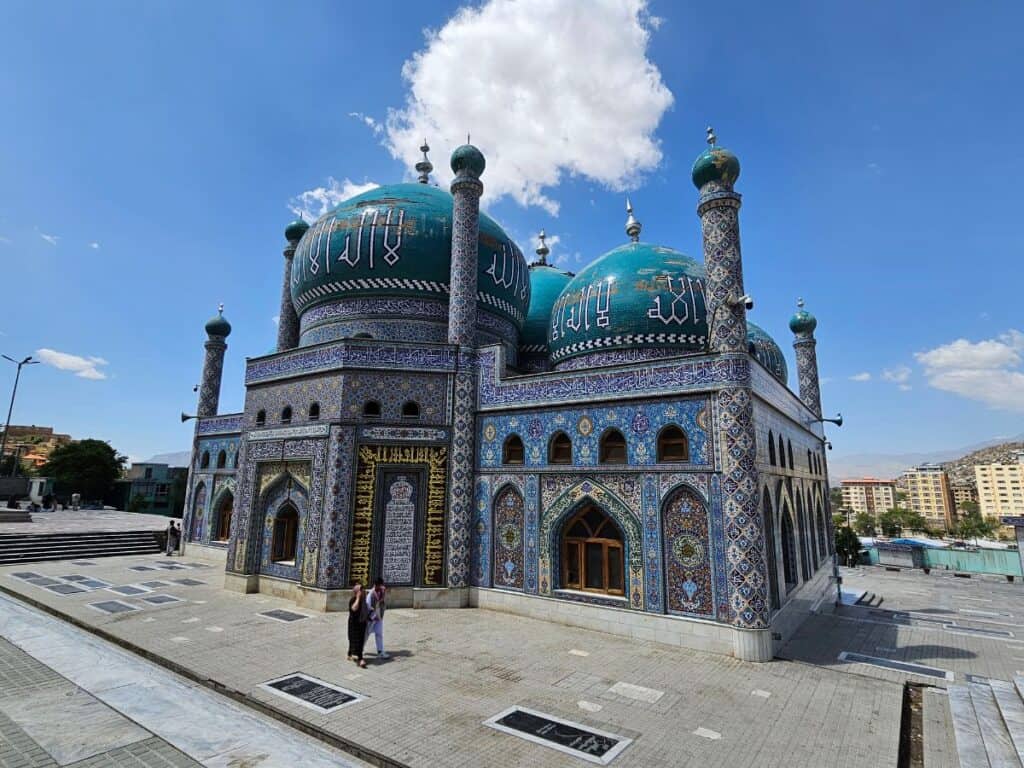
| Sakhi Shrine | Early 20th century | Good | Free | Spiritual significance, intricate blue tilework | Kabul |
| Gardens of Babur | 16th century | Good | 300 AFN (~$4) | Mughal gardens, burial site of Emperor Babur, restored beauty | Kabul |
What to visit in Kabul
- The Bird Market in Kabul reflects a lively tradition that has endured through centuries, offering visitors a chance to observe locals engaging in a favorite pastime—trading and showcasing birds in a vibrant, centuries-old market atmosphere.
- The Shah Do Shamshira Mosque, built in the 1920s, showcases an Italianate style unique to Kabul’s Islamic architecture, representing a period of modernization under King Amanullah Khan. Not far from here is the Id Gah Mosque, dating back to the 17th century, where major religious gatherings and Eid prayers have taken place for generations.
- For panoramic views over Kabul, the Bibi Mahro Hills offer a serene escape and a sweeping vista, while the Sakhi Shrine brings spiritual vibrancy to the city, decorated in intricate tilework and embodying Kabul’s deep-rooted traditions.
- Lastly, the Gardens of Babur, established in the early 16th century by Emperor Babur, the founder of the Mughal Empire, is a historical oasis where visitors can stroll through terraced gardens and appreciate the restoration efforts that preserve this lush space.
Bamiyan
The Valley of Ancient Monuments and Natural Wonders
The town of Bamiyan, often regarded as Afghanistan’s “Valley of Gods,” stands as a testament to the country’s Buddhist past and the beauty of the Central Highlands. Inhabited since the 3rd century BCE, Bamiyan once thrived as a center of Buddhist learning along the Silk Road. Although much was lost to history, Bamiyan still fascinates with its monumental relics.
| Place to Visit | Date Built | State | Entrance Ticket | Highlights | Province |
|---|---|---|---|---|---|
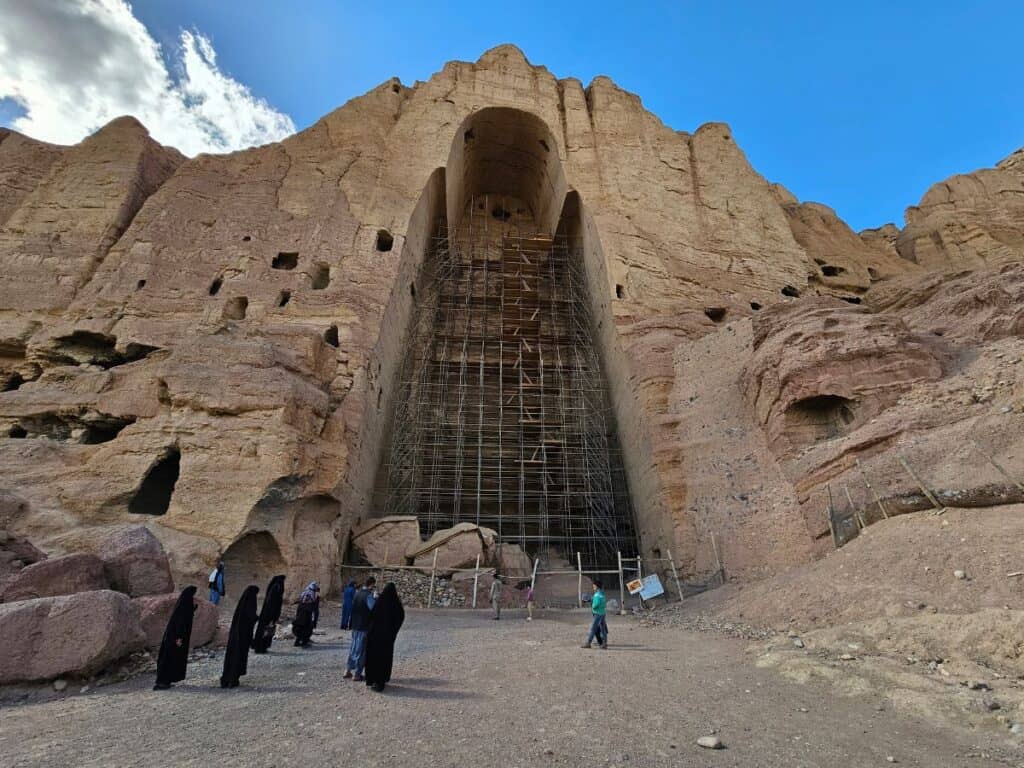
| Buddhas of Bamiyan | 6th century | Ruins | 300 AFN (~$4) | Iconic Buddhist heritage, large niches remaining | Bamiyan |
| Zuhak (Red City) | 6th century | Ruins | 100 AFN (~$1.30) | Ancient fortress with red stone walls, historical battle site | Bamiyan |
| Gholghola City | 13th century | Ruins | 100 AFN (~$1.30) | “City of Screams,” destroyed by Genghis Khan, panoramic views | Bamiyan |
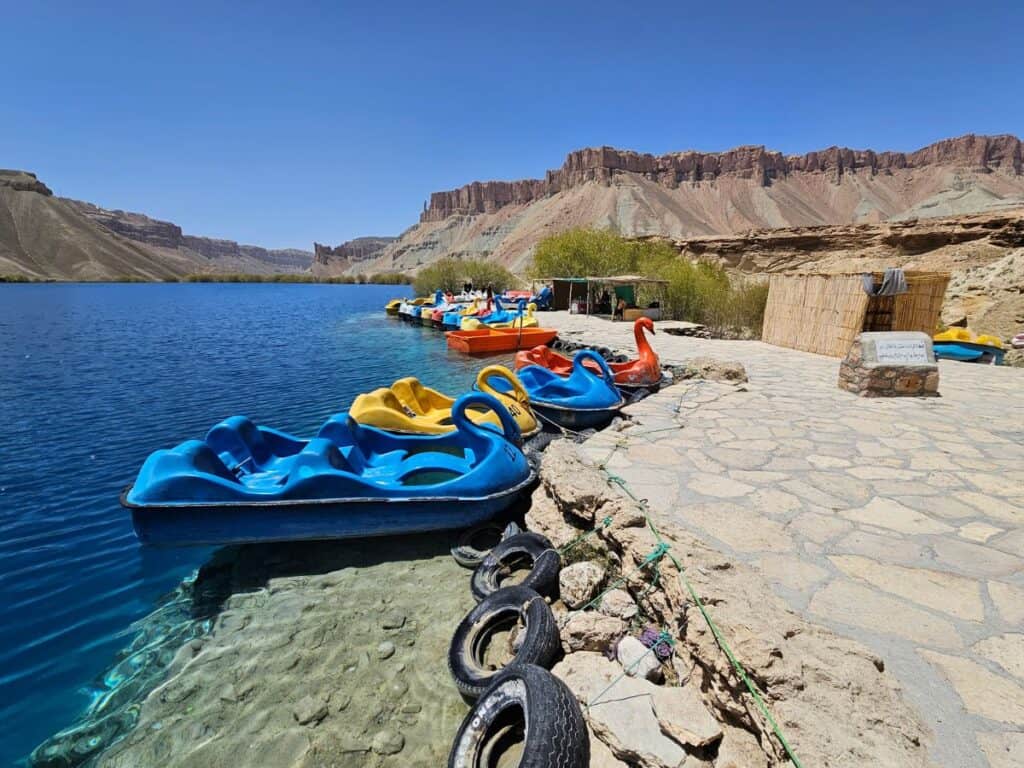
| Band-e Amir National Park | Natural Site (2009) | Good | 500 AFN (~$6.50) | Series of natural blue lakes, stunning scenery, Afghanistan’s first park | Bamiyan |
What to visit in Bamiyan
- The Buddhas of Bamiyan, carved into towering cliffs in the 6th century, were some of the largest standing Buddha statues before their tragic destruction in 2001. The niches where these statues once stood evoke the grandeur of Bamiyan’s role in Buddhist history and remain a symbol of resilience and cultural heritage.
- Further along the cliffs lies Zuhak (The Red City), an ancient fortress built around the 6th century and known for its distinctive red stones, believed to have once guarded Bamiyan from invaders.
- The Gholghola City, or “City of Screams,” holds a tragic history; destroyed by Genghis Khan in the 13th century as retribution for the death of his grandson, it now stands as a haunting yet beautiful ruin.
- Nearby, Band-e Amir National Park, established as Afghanistan’s first national park in 2009, captivates visitors with a series of natural, mineral-rich lakes whose blue hues contrast against the rugged landscape of the Hindu Kush mountains.
Ghazni
A Glimpse into Afghanistan’s Golden Age
Ghazni, once the dazzling capital of the Ghaznavid Empire in the 11th century, showcases Afghanistan’s medieval Islamic architecture and offers a journey through history with its towering monuments. A major Islamic center during its height, Ghazni continues to embody the artistic and cultural zenith of medieval Afghanistan.
| Place to Visit | Date Built | State | Entrance Ticket | Highlights | Province |
|---|---|---|---|---|---|
| Ghazni Minarets | 12th century | Good | Free | Medieval Islamic architecture, intricate Kufic calligraphy | Ghazni |
| Ghazni Citadel | Early Islamic period | Ruins | Free | Ancient fortress, strategic historical importance | Ghazni |
| Military Open-Air Museum | 20th century | Good | Free | Wartime relics, symbolizing resilience and recent history | Ghazni |
What to visit in Ghazni
- The iconic Minarets of Ghazni, constructed in the 12th century, rise over the landscape with ornate Kufic calligraphy, reflecting the architectural innovation of the Ghaznavid period.
- Nearby stands the Ghazni Citadel, a fortress believed to have been built in the early Islamic period, which provided crucial defense for the city against invaders throughout centuries of warfare.
- The Military Open-Air Museum in Ghazni sheds light on the region’s tumultuous history, featuring remnants from recent conflicts that stand as a stark reminder of the resilience of this historic city.
Herat
Afghanistan’s Cultural Jewel
Herat, known as the “Pearl of Khorasan,” is one of Afghanistan’s most historically rich cities. Nestled in the fertile valley of the Hari River, Herat has long been a cultural and intellectual center, celebrated for its art, poetry, and architectural marvels. With roots tracing back to the Achaemenid Empire, this ancient city has seen empires rise and fall, from Alexander the Great to the Timurids, each leaving an indelible mark on Herat’s heritage. Today, travelers to Herat can explore a tapestry of sites that highlight the city’s glorious past.
| Place to Visit | Date Built | State | Entrance Ticket | Highlights | Province |
|---|---|---|---|---|---|
| Herat Citadel (Citadel of Alexander) | 330 BCE (original construction) | Restored | 200 AFN (~$2.60) | Originally built by Alexander the Great, offers panoramic views of Herat and centuries of fortification history. | Herat |
| Jame Mosque (Friday Mosque) | 12th century (expanded in 15th century) | Good | Free | Known for its stunning blue tilework and Timurid architecture, a masterpiece of Islamic art and prayer site. | Herat |
| Musalla Complex and Minarets | 15th century | Partially Ruined | Free | Remaining minarets from a grand educational complex commissioned by Queen Gawhar Shad, reflecting Timurid grandeur. | Herat |
| Gowhar Shad Mausoleum | 15th century | Good | Free | Resting place of Queen Gawhar Shad with a turquoise dome, exemplifies Timurid decorative tilework and design. | Herat |
| Herat National Museum | Various periods | Good | 100 AFN (~$1.30) | Artifacts from Herat’s past, including Timurid art, manuscripts, and ancient pottery; a gateway to Herat’s history. | Herat |
| Tomb of Jami | 15th century | Good | Free | Mausoleum of renowned Sufi poet Jami, a pilgrimage site for those interested in Persian literature and spirituality. | Herat |
| Char Su Bazaar | Centuries-old | Good | Free | Bustling traditional market showcasing Afghan handicrafts, carpets, spices, and local culture in Herat’s old town. | Herat |
| Pul-e-Malan Bridge | Medieval period | Good | Free | 22-arch bridge crossing the Hari River, an example of medieval Afghan engineering and picturesque views. | Herat |
| Shrine of Khwaja Abd Allah Ansari | 11th century | Good | Free | Spiritual sanctuary honoring a famous Sufi saint, with peaceful gardens and intricate architectural details. | Herat |
| Park-e-Taranasaz (Musicians’ Park) | Modern era | Good | Free | Cultural park dedicated to local music and gatherings, celebrating Herat’s vibrant musical traditions. | Herat |
What to visit in Herat
- The Herat Citadel, also known as the Citadel of Alexander, stands as a testament to Herat’s strategic importance over centuries. Originally constructed by Alexander the Great around 330 BCE, this massive fortress has been rebuilt and restored numerous times. Its tall, imposing walls offer breathtaking views of the city and evoke the strength and endurance of Herat through centuries of change.
- The Jame Mosque, or Friday Mosque, built in the 12th century and later expanded under the Timurid rulers in the 15th century, is an architectural masterpiece renowned for its magnificent blue tilework and intricate mosaics, reflecting the pinnacle of Islamic artistry.
- A few blocks away, the Musalla Complex and its famous minarets rise high over the cityscape, remnants of a vast religious and educational complex commissioned by Queen Gawhar Shad in the 15th century. Despite suffering damage over time, the towering minarets remain, symbolizing Herat’s era as a center of learning and architectural innovation. Close by is the Gowhar Shad Mausoleum, a beautifully decorated resting place for the queen herself, with a distinctive turquoise dome and vibrant tilework that honors the queen’s lasting influence on Herat.
- For those interested in a deeper look into the region’s history, the Herat National Museum houses a vast collection of artifacts spanning Herat’s rich past, from ancient pottery and manuscripts to Timurid-era treasures. Nearby, the Tomb of Jami is a quiet yet revered site dedicated to the famed Sufi poet Jami, who was born in Herat in the 15th century. His poetic contributions to Persian literature make this mausoleum a pilgrimage site for literary enthusiasts and those seeking spiritual insight.
- The bustling Char Su Bazaar immerses visitors in Herat’s vibrant trade culture, with vendors offering everything from handwoven Afghan carpets to fragrant spices and local crafts. Outside the city center, the medieval Pul-e-Malan Bridge, with its 22-arched structure spanning the Hari River, showcases traditional Afghan engineering and provides a scenic view of the surrounding landscape.
- For a moment of reflection, the Shrine of Khwaja Abd Allah Ansari in nearby Gazar Gah is a place of pilgrimage dedicated to the beloved 11th-century Sufi saint. This peaceful sanctuary, with its ornate decoration and serene gardens, continues to attract visitors who come to pay their respects to the mystic and to experience the tranquility of the shrine.
Kandahar
The Legacy of Afghanistan’s Founding Fathers
Kandahar, often called the “cradle of Afghanistan,” holds a prominent place in the country’s history as the birthplace of modern Afghanistan. Founded by Ahmad Shah Durrani in 1747, Kandahar served as the capital of the Durrani Empire and continues to honor its legacy through remarkable historical sites.
| Place to Visit | Date Built | State | Entrance Ticket | Highlights | Province |
|---|---|---|---|---|---|
| Tomb of Ahmad Shah Durrani | 18th century | Good | Free | Mausoleum of modern Afghanistan’s founder, colorful tilework | Kandahar |
| Mirwais Hotak Shrine | 18th century | Good | Free | Honors a key independence leader, historical significance | Kandahar |
| Chihil Zina Top | Natural Site | Good | Free | Scenic views of Kandahar’s landscape | Kandahar |
| Red Mosque | 20th century | Good | Free | Notable red-brick design, architectural and religious landmark | Kandahar |
What to visit in Kandahar
- The Tomb of Ahmad Shah Durrani stands as a revered site, with its colorful tilework and spiritual significance drawing visitors who wish to pay respect to the father of Afghanistan.
- The Mirwais Hotak Shrine honors an earlier hero who led Afghan tribes in resistance against Persian rule in the early 18th century, a story etched into the pride of Kandahar.
- For those interested in panoramic views, Chihil Zina Top provides a viewpoint overlooking the city, allowing travelers to appreciate Kandahar’s scenic surroundings.
- The Red Mosque, with its distinctive brickwork and historical significance, adds another layer of Kandahar’s architectural and religious heritage.
Sorubi Valley
Afghanistan’s Hidden Oasis
Nestled between Kabul and Jalalabad, Sorubi Valley offers travelers a peaceful retreat from the bustling cities. Its rivers and lush green scenery provide a glimpse of Afghanistan’s natural beauty, where visitors can relax by the lake, hike through the valleys, or enjoy the views of this idyllic valley landscape.
What to visit in Sorubi Valley
| Place to Visit | Date Built | State | Entrance Ticket | Highlights | Province |
|---|---|---|---|---|---|
| Sorubi Valley Scenic Areas | Natural Site | Good | Free | Lush landscape, rivers and green valleys, serene natural beauty | Kabul |
Jalalabad
A Blend of Royalty and Nature
Jalalabad, a city with roots in the Mughal era, served as a winter retreat for kings due to its warmer climate and lush surroundings. Today, it combines historical sites and natural beauty, offering visitors a chance to experience Afghan heritage and serene landscapes.
| Place to Visit | Date Built | State | Entrance Ticket | Highlights | Province |
|---|---|---|---|---|---|
| Mausoleum of King Amanullah Khan | 20th century | Good | Free | Honoring a progressive Afghan king, historical legacy | Jalalabad |
| Seraj-ul Emorat Gardens | Mughal era | Good | Free | Lush gardens, Mughal heritage, serene environment | Jalalabad |
| Hada Museum | Ancient artifacts | Good | 200 AFN (~$2.60) | Houses ancient relics, significant archaeological finds | Jalalabad |
| Jalalabad Bazaar | Centuries-old | Good | Free | Vibrant market for local handicrafts and produce | Jalalabad |
What to visit in Jalalabad
- The Mausoleum of King Amanullah Khan, built to honor one of Afghanistan’s most progressive leaders, stands as a testament to his legacy and vision for a modern Afghanistan.
- In the heart of Jalalabad, Seraj-ul Emorat Gardens captivates visitors with its floral beauty and serves as a reminder of Jalalabad’s Mughal heritage.
- History enthusiasts can visit the Hada Museum, which houses artifacts dating back to ancient civilizations, shedding light on the area’s significant archaeological finds.
- The Jalalabad Bazaar provides a lively market experience where travelers can browse local handicrafts and experience the vibrant commerce of the region.
Balkh
The Ancient City of Knowledge
Known as the “Mother of Cities,” Balkh is one of the oldest cities in the world and was a center of Zoroastrian, Buddhist, and Islamic learning. Conquered by Alexander the Great in 329 BCE, Balkh’s history spans centuries, with many cultural and religious influences leaving their mark.
| Place to Visit | Date Built | State | Entrance Ticket | Highlights | Province |
|---|---|---|---|---|---|
| Khoja Parsa Mausoleum | Medieval period | Good | Free | Sufi mausoleum with exquisite decoration, spiritual significance | Balkh |
| Bala Hisar | Ancient | Good | Free | Strategic ancient fort, key to Balkh’s history | Balkh |
| No Gombad Mosque | 9th century | Good | Free | Early Islamic architecture, intricate carvings, one of the oldest mosques | Balkh |
What to visit in Balkh
- The Khoja Parsa Mausoleum is an exquisitely decorated monument dedicated to a Sufi saint and reflects the deep spiritual traditions that have flourished in Balkh.
- Bala Hisar, an ancient fortification that overlooks the city, provides a glimpse into Balkh’s strategic importance through the ages.
- Perhaps most fascinating is the No Gombad Mosque, believed to date back to the 9th century, making it one of the oldest mosques in the Islamic world. This architectural wonder is an example of early Islamic art, featuring intricate carvings that hint at Afghanistan’s historical significance.
Mazar-e-Sharif
Afghanistan’s Spiritual Gem
Mazar-e-Sharif, located in northern Afghanistan, is revered for its religious significance and is known for its stunning architecture and bustling bazaars. Legend holds that the city is the final resting place of Ali, the Prophet Muhammad’s son-in-law, making it a significant pilgrimage site.
| Place to Visit | Date Built | State | Entrance Ticket | Highlights | Province |
|---|---|---|---|---|---|
| Blue Mosque (Shrine of Hazrat Ali) | 12th century | Good | Free | Stunning blue tilework, major pilgrimage site, mystical atmosphere | Mazar-e-Sharif |
| Baba Mazari Mausoleum | 20th century | Good | Free | Memorial to Abdul Ali Mazari, historical importance | Mazar-e-Sharif |
| Mazar-e-Sharif Bazaar | Centuries-old | Good | Free | Colorful market for carpets, handicrafts, and local goods | Mazar-e-Sharif |
| Takht-i Rustam | Early centuries CE | Good | 100 AFN (~$1.30) | Buddhist stupa and cave complex, insight into diverse religious history | Mazar-e-Sharif |
What to visit in Mazar-e-Sharif
- The Blue Mosque, also known as the Shrine of Hazrat Ali, dates back to the 12th century and is renowned for its striking blue-tiled facade and spiritual aura. A flock of white doves is said to guard the mosque, adding to its mystical charm.
- The Baba Mazari Mausoleum honors a more recent figure, Abdul Ali Mazari, a prominent Afghan leader, and reflects Mazar-e-Sharif’s historical layers.
- Visitors can wander through the Bazaar, where an array of Afghan carpets, textiles, and handcrafted goods bring the local culture to life.
Takht-i Rustam
A Buddhist Legacy in Samangan
Takht-i Rustam, located near the town of Aybak in Samangan Province, is an ancient Buddhist site dating back to the early centuries CE, around the 4th to 5th centuries. This unique archaeological complex consists of a domed stupa carved directly into a hilltop, surrounded by a series of caves that once served as monastic quarters for Buddhist monks. It is named after the legendary Persian hero Rustam, although the site’s origins are firmly rooted in Buddhism. The location served as a center for Buddhist learning and spiritual practice, making it one of Afghanistan’s key remnants of its Buddhist heritage.
| Feature | Description | Highlights |
|---|---|---|
| Rock-Carved Stupa | A unique stupa carved directly into the hilltop, resembling a large stone altar. | Represents early Buddhist architecture from the 4th–5th centuries CE; rare monolithic design carved from bedrock, embodying austere spiritual ideals. |
| Meditation Caves | A series of small rock-carved caves surrounding the stupa, likely used as monastic cells by Buddhist monks. | Reflects the simplicity and dedication of Buddhist monastic life; provides insight into the daily practices of ancient monks along the Silk Road. |
| Courtyard and Drainage System | An ingeniously carved courtyard below the stupa with a drainage system to manage rainwater. | Demonstrates advanced ancient engineering, essential for sustaining life; the drainage system shows attention to practical design in harsh landscapes. |
What to visit in Takht-i Rustam
- Rock-Carved Stupa: Unlike traditional stupas built above ground, the stupa at Takht-i Rustam is carved directly into the bedrock on top of a hill. This monolithic design is unusual, creating the appearance of a large stone altar, believed to date back to the 4th or 5th century CE. This stupa is an excellent example of early Buddhist architecture and reflects the austere spiritual practices of that era.
- Meditation Caves: Surrounding the stupa, a series of small caves were carved into the rocky hillside. These caves likely served as monastic cells where Buddhist monks would meditate, study, and reside. The interiors are modest but evoke the simplicity and dedication of the monks who once lived there.
- Courtyard and Drainage System: Below the stupa, a courtyard is carved into the rock, featuring an ancient drainage system that channels rainwater away from the site. This shows a high level of engineering skill and attention to practicality, essential for sustaining life in a monastic settlement.
- Panoramic Views: Perched on a hilltop, Takht-i Rustam offers sweeping views over the surrounding valleys and mountains of Samangan Province, providing a tranquil setting that complements the site’s historical and spiritual ambiance.
- Proximity to Silk Road Routes: Takht-i Rustam’s location along ancient trade routes speaks to its historical importance. As a Buddhist center, it would have been a place of refuge and spiritual practice for travelers and monks journeying along the Silk Road, connecting South Asia with Central Asia.
Kholm
A Glimpse into Afghan Royalty
Kholm, a smaller town with royal connections, invites visitors to experience Afghan history through its well-preserved sites and tranquil landscapes.
| Place to Visit | Date Built | State | Entrance Ticket | Highlights | Province |
|---|---|---|---|---|---|
| Bagh e Jahan Nama Palace | Royal Afghan architecture | Good | Free | Afghan royal design, tranquil gardens, architectural elegance | Kholm |
What to visit in Kholm
- The Bagh e Jahan Nama Palace, surrounded by gardens, serves as a beautiful example of Afghan royal architecture and provides a peaceful setting to appreciate the region’s heritage. This palace embodies the elegance of Afghan design and offers visitors a serene escape within Kholm’s scenic environment.