Crossing the Sahara

Home · Best Travel Experiences · Morocco
on a Motobécane moped — Erfoud to Erg Chebbi, 2010

We knew which direction Algeria was.

That did not mean we knew where the track was.

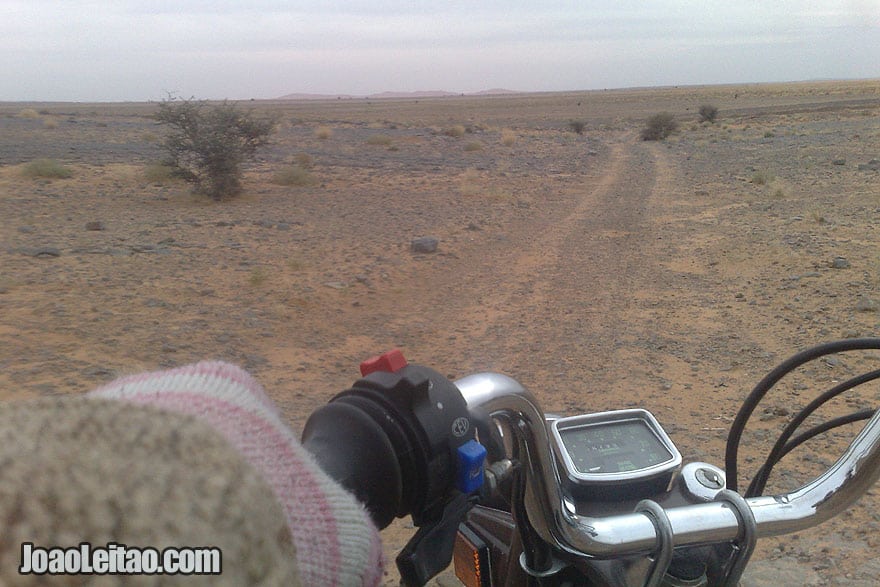
In front of us there was rock, sand, small bushes and several tyre marks disappearing in different directions. Somewhere farther ahead were the dunes of Erg Chebbi.

The mountains along the Algerian border were still visible, so we were not exactly lost.

But we didn't really know where we were either.

Under me was a tiny Motobécane moped with pedals.

It seemed like the right machine for the situation.

Story Notes

Where
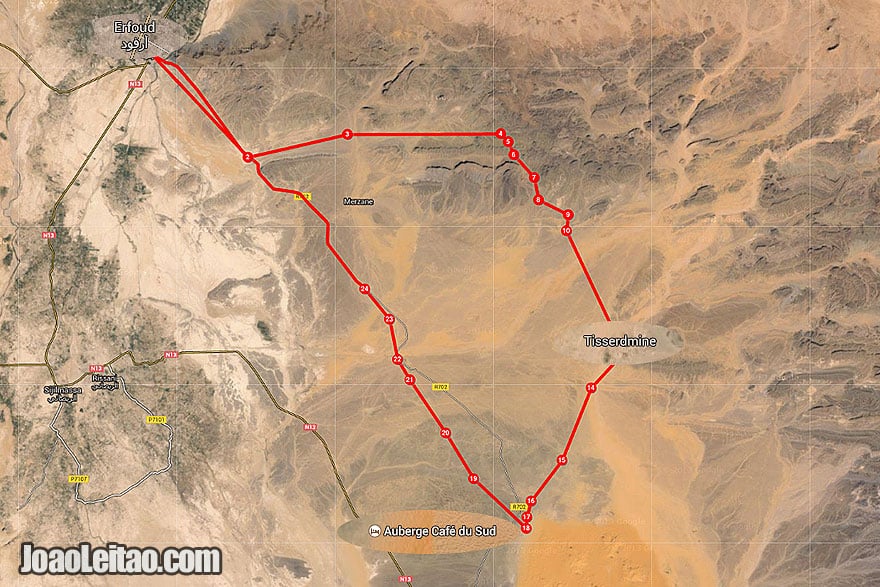
Erfoud → Erg Chebbi, southeastern Moroccan Sahara
When
February 2010 · ~40 km · roughly nine hours
Machines
Two small Motobécane mopeds — the "Mobylettes" everybody used for town transport
With
Samuel Santos of the travel blog Dobrar Fronteiras
The night
Auberge Café du Sud, beneath the dunes of Erg Chebbi

Samuel came to Erfoud

This was in 2010, when I was living in Erfoud in southeastern Morocco.

My friend Samuel Santos, from the travel blog Dobrar Fronteiras, came to visit me.

We started thinking about what we could do together.

I had already been living in this region of the Moroccan Sahara for several years, so I knew the general geography around Erfoud, Rissani and Erg Chebbi well.

We could easily have taken the normal road.

Instead, I suggested mopeds.

Not proper off-road motorcycles.

Not enduro bikes.

Mopeds.

Two small Motobécanes of the type everybody used for ordinary transport.

The idea was to leave Erfoud, get onto the desert tracks, travel through the area toward the Algerian border and eventually reach the dunes of Erg Chebbi and Auberge Café du Sud.

Then we would sleep there.

Simple enough.

Not quite motorcycles

The Motobécanes were motorcycles, technically.

But only just.

Small engines.

Thin wheels.

Pedals.

Very little suspension for what we were about to do.

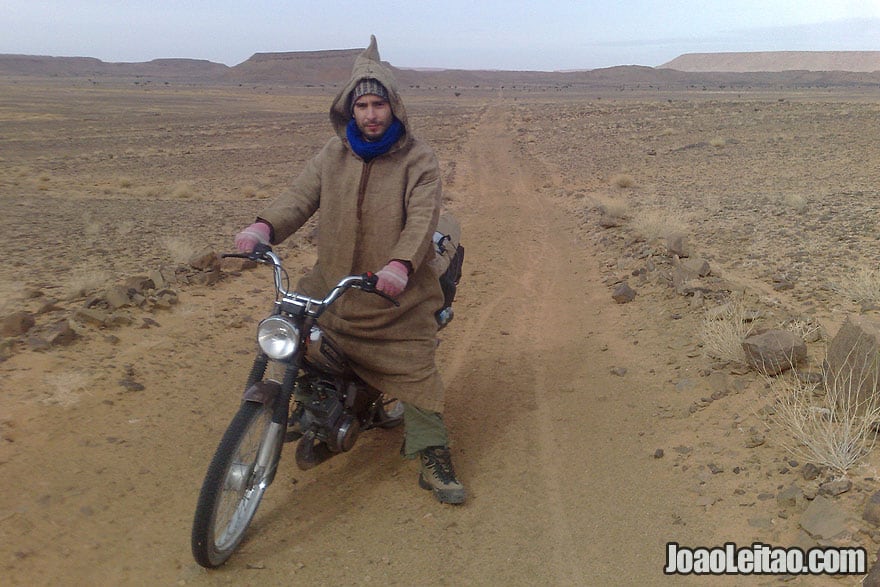
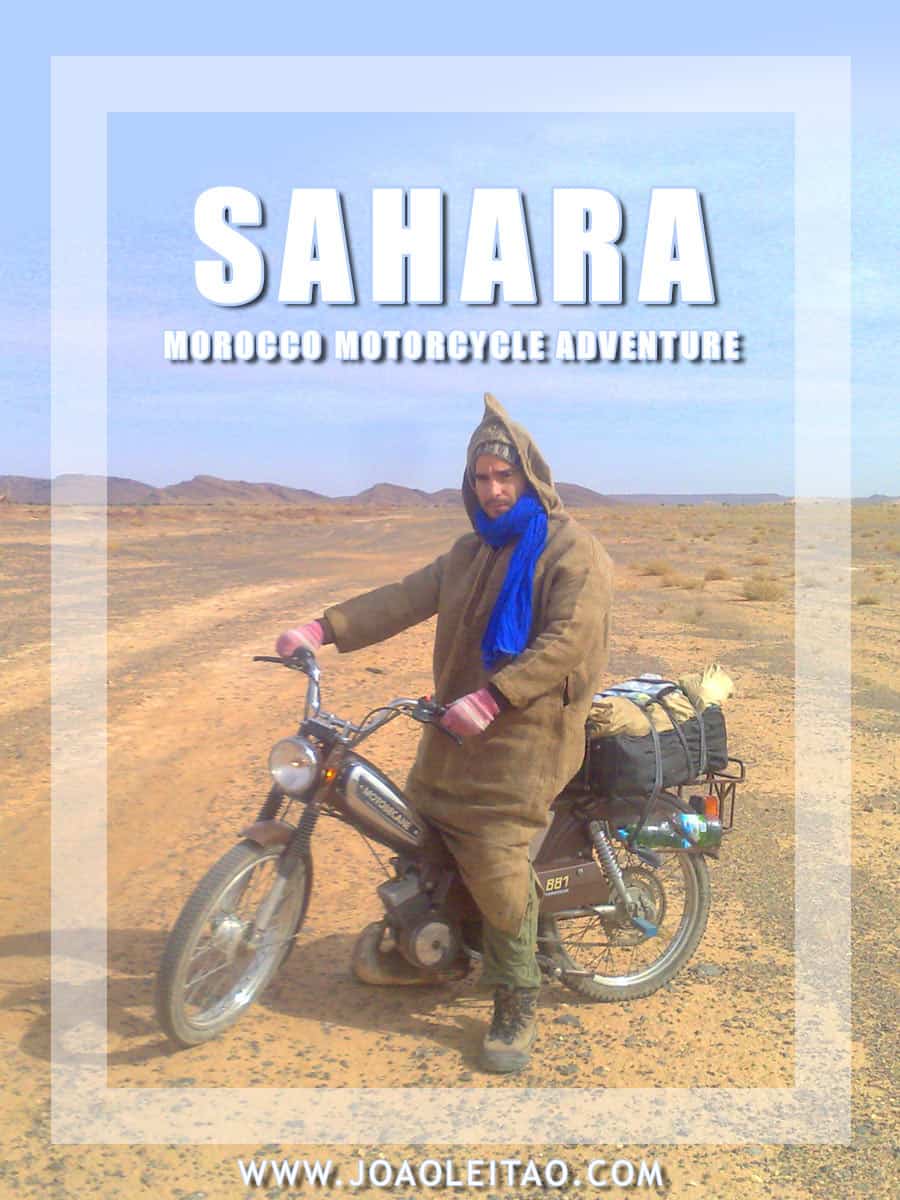
Rider in a hooded djellaba and blue scarf standing beside a small Motobécane moped loaded with bags on a desert track in Morocco
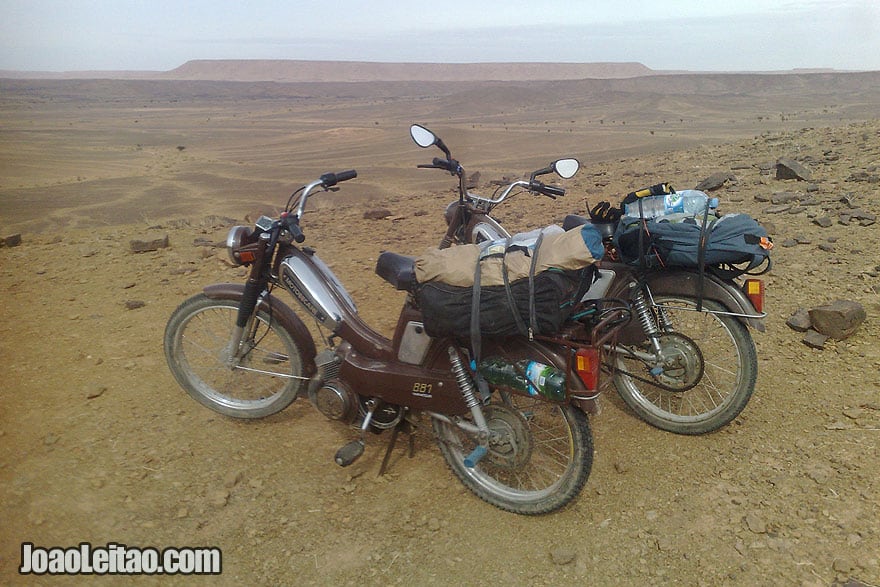
The loaded Motobécane — bags, water, rope and fuel strapped to a machine built for town errands

In Morocco, people commonly called this kind of machine a Mobylette.

They were practical.

Cheap.

Easy to work on.

Perfect for getting around town.

We loaded ours with backpacks, water, extra fuel, rope and whatever else we thought we might need, then took them into terrain normally crossed by 4WD vehicles.

That was where the difference became obvious.

On asphalt, everything was easy.

On hard track, they were still surprisingly capable.

Then we reached sand.

February in the Sahara

It was February.

The problem was not heat.

It was cold.

Once the mopeds were moving, the winter air hit us continuously.

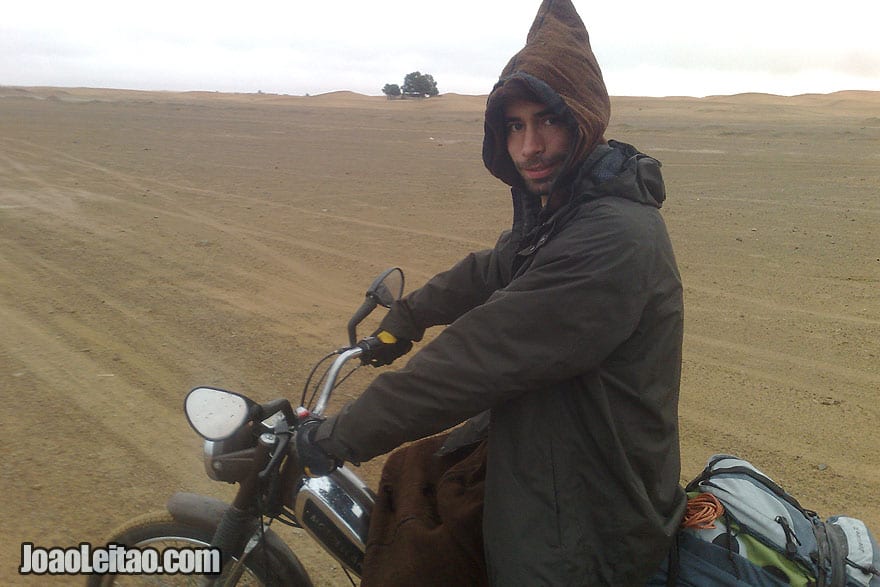
We wore thick clothes, scarves, gloves and boots. In some of the photographs I look as if I am dressed for somewhere much colder than the Sahara.

Close portrait of a rider wrapped in a heavy jacket and pointed wool hood sitting on a loaded Motobécane moped in the Moroccan Sahara
Dressed for the February wind — hours on an exposed moped are colder than they look

But hours on an exposed motorcycle are different from standing in the sun.

There was no windscreen.

No protection.

Just cold, dry air coming straight at us.

And because our mopeds were slow, we got to enjoy it for a very long time.

We left the obvious tracks

We could have followed an established route toward Erg Chebbi.

That would have defeated the purpose.

Instead, we started exploring.

A track went left.

We followed it.

Another line of tyres appeared.

We tried that.

Then the track divided.

Choose one.

Sometimes the marks became weaker.

Sometimes they disappeared completely.

This was where we became sort of lost.

Not lost in the sense that we had no idea where Algeria, Erfoud or Erg Chebbi were.

The mountains along the border gave us a rough reference.

We knew the general direction.

What we did not know was which path across the desert actually connected with anything.

That was much more fun.

At least most of the time.

Forty kilometres, nine hours

The section we crossed was only about 40 kilometres.

It took us roughly nine hours.

That tells you everything about the speed.

Sand slowed us down.

Rocks slowed us down.

Small hills slowed us down.

Stopping to decide which tyre tracks looked most convincing slowed us down.

Then the mopeds themselves slowed us down.

The terrain also looked nothing like the classic image people have of the Sahara.

We were not riding all day over enormous orange dunes.

Much of the region was hard, rocky desert.

Gravel.

Low ridges.

Loose stones.

Flat open plains.

Sparse bushes.

Then stretches of softer sand.

The great dune field of Erg Chebbi was something we were riding toward, not the terrain covering the whole journey.

That contrast is visible in the photographs.

For hours, the mopeds crossed brown and grey ground.

Then orange dunes appeared on the horizon.

The mountains kept us oriented

Whenever we became uncertain, we still had one large reference.

The mountains along the Algerian border.

We could see them.

So we could follow their general line and maintain a sense of direction even when the tracks underneath us made absolutely no sense.

It was navigation by landscape more than by road.

A track could disappear, but the mountains did not.

That was enough to keep moving.

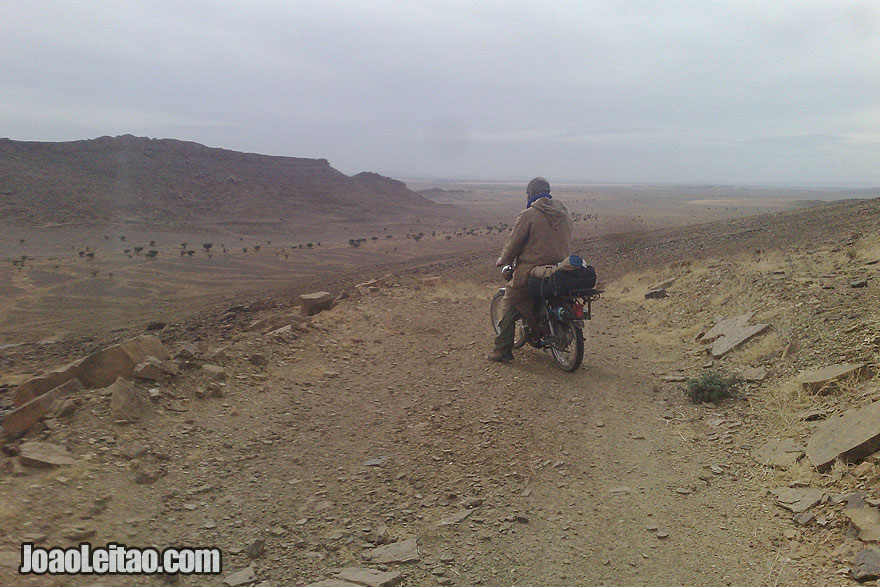
Sometimes we had to stop on higher ground and look.

A rider resting on his moped on a rocky hillside, looking out over an immense desert basin dotted with isolated trees in the Moroccan Sahara
Looking for the way down — reading the desert from higher ground

From those viewpoints, the scale became enormous.

Small trees appeared hundreds of metres apart.

Tracks crossed one another far below us.

Low ridges broke up the horizon.

Somewhere beyond all of it was the route we wanted.

So we picked another direction and descended.

Then the chain gave us trouble

Eventually one of the mopeds stopped us for a more concrete reason.

The chain had a problem.

Now we were not discussing which direction to ride.

We weren't riding anywhere.

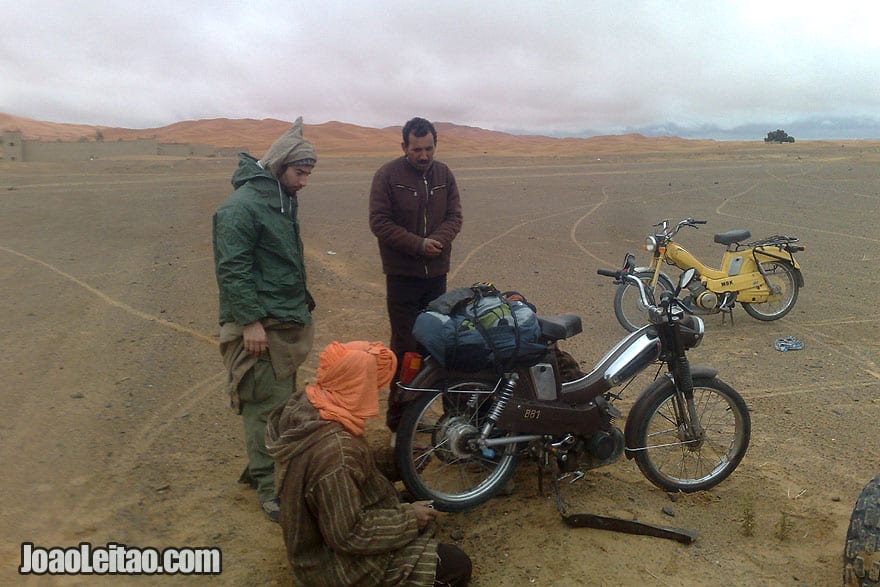
A local man crouched beside the rear wheel of a loaded Motobécane fixing the chain, while João and Samuel watch — a yellow moped, a ksar and the dunes of Erg Chebbi in the background
The chain repair — a local man, our loaded Motobécane, and Erg Chebbi already on the horizon

One of my favourite photographs from the trip is from this moment.

The Motobécane is sitting on the desert ground with all our luggage still strapped across the back.

Samuel and I are there.

A local man is crouched beside the rear wheel, working on the chain.

Another small yellow moped stands nearby.

Beyond us are the dunes.

This was one advantage of travelling on such basic machines.

These mopeds were common local transport.

People understood them.

There was no complicated electronics system requiring a computer.

A chain was a chain.

Someone who knew the machine could look at it, work on it and get us moving again.

And that is what happened.

The desert was never completely empty

That repair also shows something the wide photographs don't immediately communicate.

The Sahara could look completely empty.

Then somebody would appear.

You could ride for a long time without seeing anyone and suddenly find a person, a small settlement, another motorcycle or somebody travelling along a track you hadn't even noticed.

The desert was not empty. We simply didn't always know where everybody was.

That day, finding somebody who could help with the chain was particularly useful.

Once the problem was sorted, we continued.

Erg Chebbi appeared

Eventually the landscape changed.

The dunes became unmistakable.

Erg Chebbi rose in front of us as this enormous orange mass beyond the flatter stony ground.

An erg is a large dune field.

That helps explain what the photographs show.

Most of our ride was across stony desert and hard tracks. Erg Chebbi was the concentrated dune system at the end of it.

As we approached, navigation became much easier.

For most of the day we had been looking for tyre marks.

Now the destination itself was sitting in front of us.

There was no missing it.

Tiny motorcycles in a huge landscape

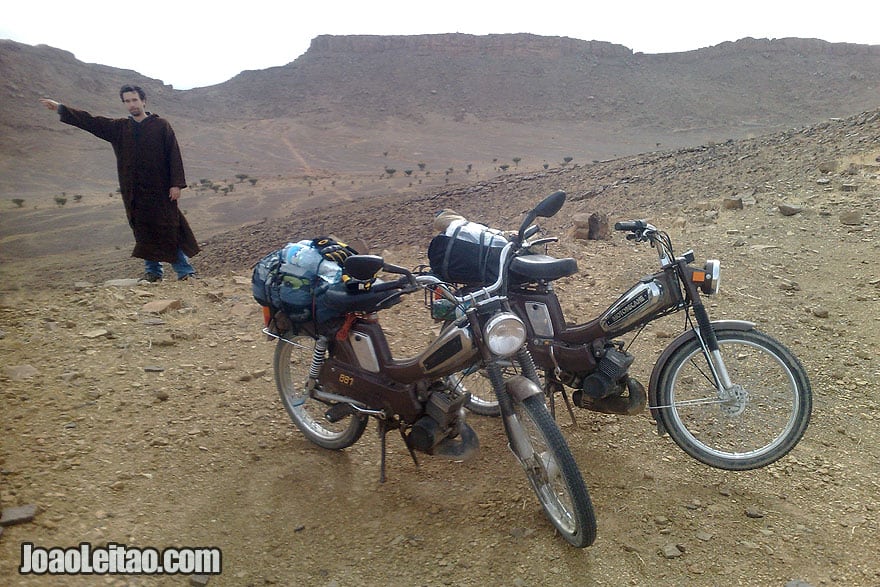
Later we stopped on high ground.

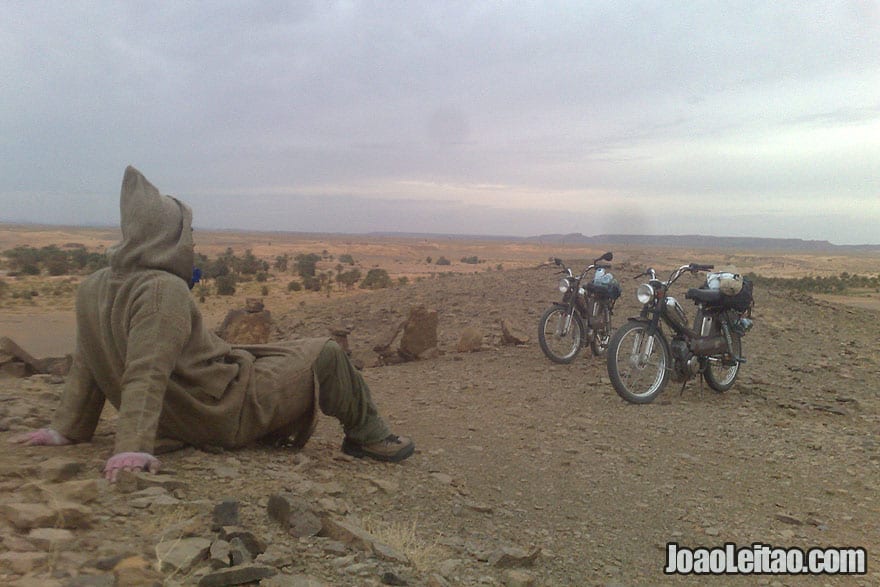
The two mopeds stood together while I sat looking over the desert.

A rider in a hooded djellaba sitting on rocks above a vast desert plain at sunset, with the two loaded Motobécane mopeds parked nearby
Rest above the desert — two tiny machines in an enormous landscape

From a distance the machines looked ridiculous.

They were tiny compared with everything around them.

That was what made the trip work.

On a proper off-road motorcycle, forty kilometres of this terrain might not have been much of a story.

On a Motobécane, everything became an event.

Soft sand.

An incline.

Loose rock.

The chain.

Getting sort of lost.

Cold wind.

Every problem was amplified because the machines had so little in reserve.

Following the last light

By late afternoon, the Sahara turned orange.

The light came low across the ground and every rock produced a long shadow.

We had been moving for hours.

My hands were cold.

We were tired.

The bikes were dirty.

Our bags were still tied to the rear racks.

But by then we knew we were going to reach Erg Chebbi.

The dunes were there.

The difficult part of the crossing was behind us.

We continued toward Café du Sud.

Sleeping at Café du Sud

We reached Auberge Café du Sud that evening.

That was the end of the desert crossing for the day.

After roughly nine hours covering around forty kilometres on two little mopeds, we didn't continue back to Erfoud.

We slept there.

That gave the journey a very simple ending.

No final push through the night.

No attempt to turn an already long day into something bigger.

We arrived.

Parked the Motobécanes.

And stopped.

The next part of the route was much easier.

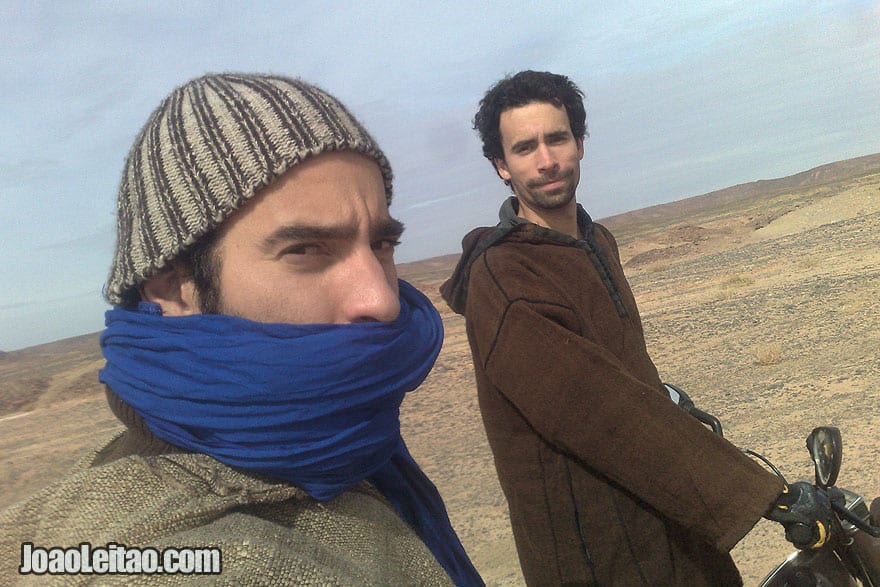
Selfie of João in a blue scarf and wool hat riding on a paved desert road, with Samuel following behind on his moped and mountains in the distance
Back on asphalt — where the little bikes belonged again

Once we reached proper road, the small bikes changed personality immediately.

On asphalt they were back where they belonged.

After spending a day fighting tracks, sand, rocks and uncertain directions, a strip of tarmac felt perfect.

Why I remember this ride

I already knew Erg Chebbi.

I had travelled through this part of Morocco many times.

I had even crossed the Sahara between Erfoud and Erg Chebbi by bicycle a couple of years earlier.

The landscape was not the new part.

The mopeds were.

They changed the scale of everything.

A short distance became nine hours.

A track became a navigation problem.

A little sand became difficult.

A loose chain stopped the expedition.

And because we moved so slowly, we spent an entire day inside forty kilometres of desert.

We weren't completely lost.

The Algerian mountains were still there on the horizon, giving us a line to follow.

We just didn't know exactly how to get where we were going.

That was enough.

By sunset, two dusty Motobécanes were parked at Café du Sud beneath Erg Chebbi.

We slept there that night.

Continue through my best travel experiences for more stories from the Sahara and beyond.

Guaranteed departures · Morocco

Experience the real Sahara.

I lived in this desert for years — today I lead small-group trips through the same dunes, ksars and desert camps around Merzouga and Erg Chebbi.

Morocco desert trips →

More stories